

How credit cards work
A credit card lets you buy goods and services, up to an approved credit limit, which you’ll then pay back later.
When you use your credit card, we’re lending you money and you’ll need to repay it. We may charge you interest on that money, and there may be fees you need to pay.
This is different from a debit or EFTPOS card, where you’re usually spending money, you already have in your bank account.
For example, if you use your credit card to buy something for $100, you’re borrowing $100. You’ll need to pay that money back.
As you pay back what you’ve borrowed, the amount becomes available for you to borrow again, up to your credit limit.
You may also need to pay interest or fees, depending on how you use your card and how much you pay back each month.
Using your card

Using your card in-store
When you’re asked to select an account at an EFTPOS terminal, choose CRD.
CHQ and SAV won’t work with your TSB credit card.
You can also make contactless payments. For transactions above the contactless limit, you may need to enter your PIN.

Apple Pay² and Google Pay³
You can add your TSB credit card to Apple Pay or Google Pay to pay in-store, in apps and online.
Other card features

Interest and fees
How interest works
Interest is the cost of borrowing money. An interest rate is the annual percentage rate we charge for borrowing money.
We calculate interest differently for different transaction types. Purchases, cash advances and balance transfers have their own interest rates.
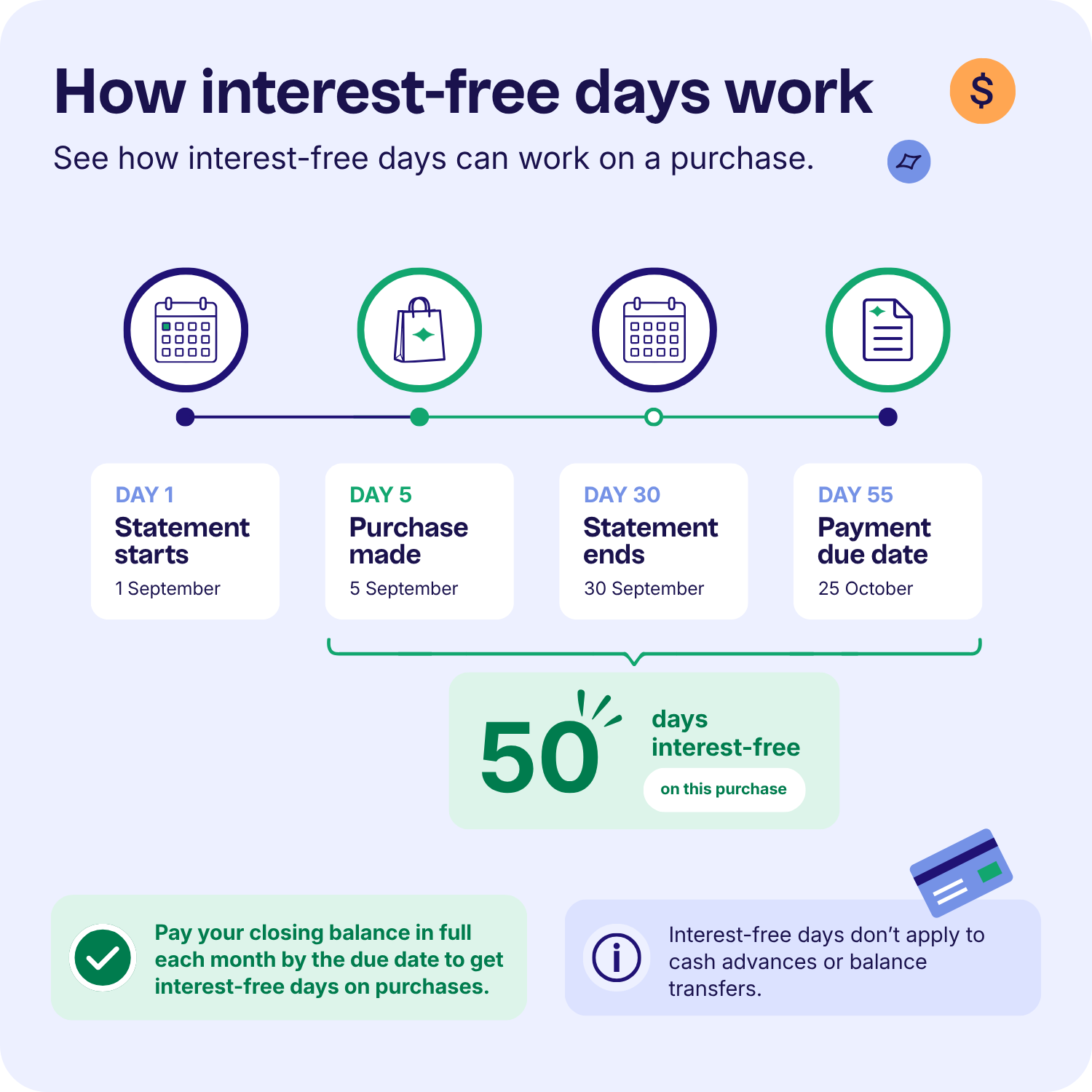
For purchases, you generally won’t pay interest if you pay your closing balance in full by the due date.
If you don’t pay your closing balance in full, you’ll generally be charged interest on your purchases. This means you can end up paying more than the original cost of what you bought.
For example, if you buy something for $500 and don’t pay your credit card balance in full, you could end up paying more than $500 for that purchase because interest is added to what you owe.
The longer you carry an unpaid balance, the more interest you may pay.
See our current credit card interest rates.
How paying back your credit card works
Each month, we’ll send you a credit card statement. Think of your statement as a monthly summary of your credit card.
It shows:
- What you’ve spent
- Any payments you’ve made
- Any interest or fees you’ve been charged
- How much you owe
- The minimum amount you need to pay
- When your payment is due.
Paying in full vs paying the minimum
What you choose to pay can affect how much interest you’re charged and how long it takes to repay what you owe.

PAY IN FULL
You pay your closing balance in full by the due date
- Generally, you won't pay interest on those purchases
- You've repaid what you owe from that statement
- Your available credit increases as you repay

PAY THE MINIMUM
You pay just the minimum payment by the due date
- You'll still owe the remaining balance
- You'll generally be charged interest on your purchases
- It can take longer and cost more to repay what you've borrowed
Paying your credit card
Get help with your card

Temporarily block your card
Misplaced your debit or credit card? Temporarily block it to stop transactions while you look for it.
Block or unblock your card from the Cards menu in the TSB mobile app or online banking. You can also call us on 0800 406 406 or +64 6 968 3700 (international).

Lost or stolen card
If your debit or credit card is lost or stolen, cancel it as soon as possible.
You can cancel your card from the Cards menu in the TSB mobile app or online banking and order a replacement at the same time. You can also call 0800 406 406, or +64 6 968 3700 from overseas. If you can’t contact us, contact Mastercard Global Emergency Services.

Dispute a transaction
Something isn’t right with a transaction?
You may be able to dispute it if goods or services didn’t arrive, were faulty or not as described, you were charged incorrectly or twice, or a cancelled subscription continued to charge you. Contact the business first to try to resolve the issue before starting a dispute.

How to apply for a TSB credit card
You can apply for our credit cards online. The application will take approximately 15-20 minutes to complete.
To apply, you'll need to make sure you:
- Are 18 years of age or over.
- Receive a regular income of $18,000 or more per year (after tax).
- Are either a New Zealand citizen living in New Zealand, or resident visa holder living in New Zealand.
- Are not bankrupt and have not had any insolvency action taken against you.
- Can meet our lending criteria and have a good credit history.
- Have your bank statements and proof of income handy.
We’ll handle all information you provide us in accordance with our Privacy Notice and the Privacy Act 2020.
More card help

Card management how-to guide
Find step-by-step guides for managing your card in online banking and the TSB mobile app.

Find the right credit card
Compare our Low Rate Mastercard and Platinum Mastercard to see which option could suit you.

Credit card FAQs
Find answers to more questions about applying for, receiving and managing your TSB credit card
Important information
- Up to 55 days interest-free on purchases when you meet the payment requirements. You need to pay the closing balance of your statement in full each month by the due date. Interest-free days don’t apply to cash advances or balance transfers.
- The TSB Apple Pay Conditions of Use apply when you use your card in Apple Pay.
- The TSB Google Pay Conditions of Use apply to Google Pay. See Google Pay for more.